

Bag Dump Stations
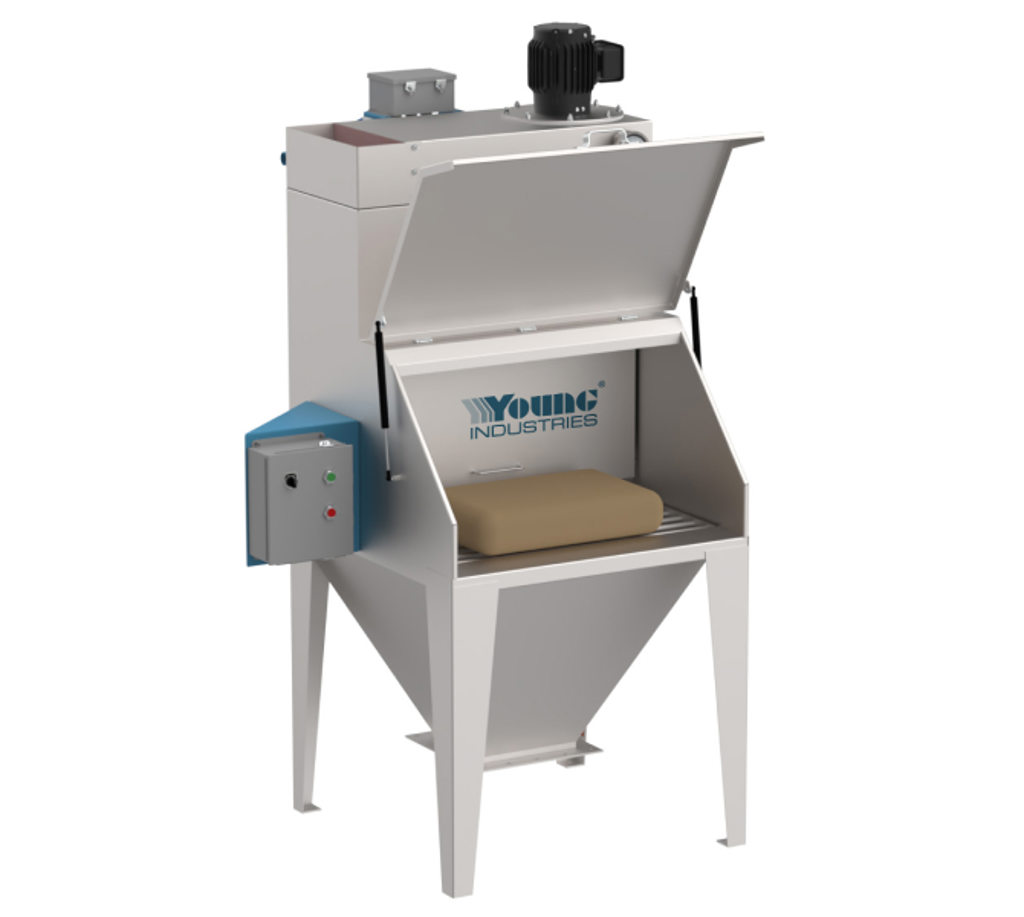
Young Industries' filter bag dump stations and bag compactors provide a clean and efficient solution for manual material handling while controlling dust emissions. These stations feature a dust collection system that captures airborne particles during bag emptying and compacts empty bags to reduce waste volume. Options such as air filters, vibratory units, and automatic bag compactors enhance safety and operational efficiency, making them ideal for industries where dust containment and clean working environments are crucial.
Young Industries Bag Dump Stations

Young Industries filter bag dump stations offer dust control when dumping paper bags without loss of valuable powder.
Learn More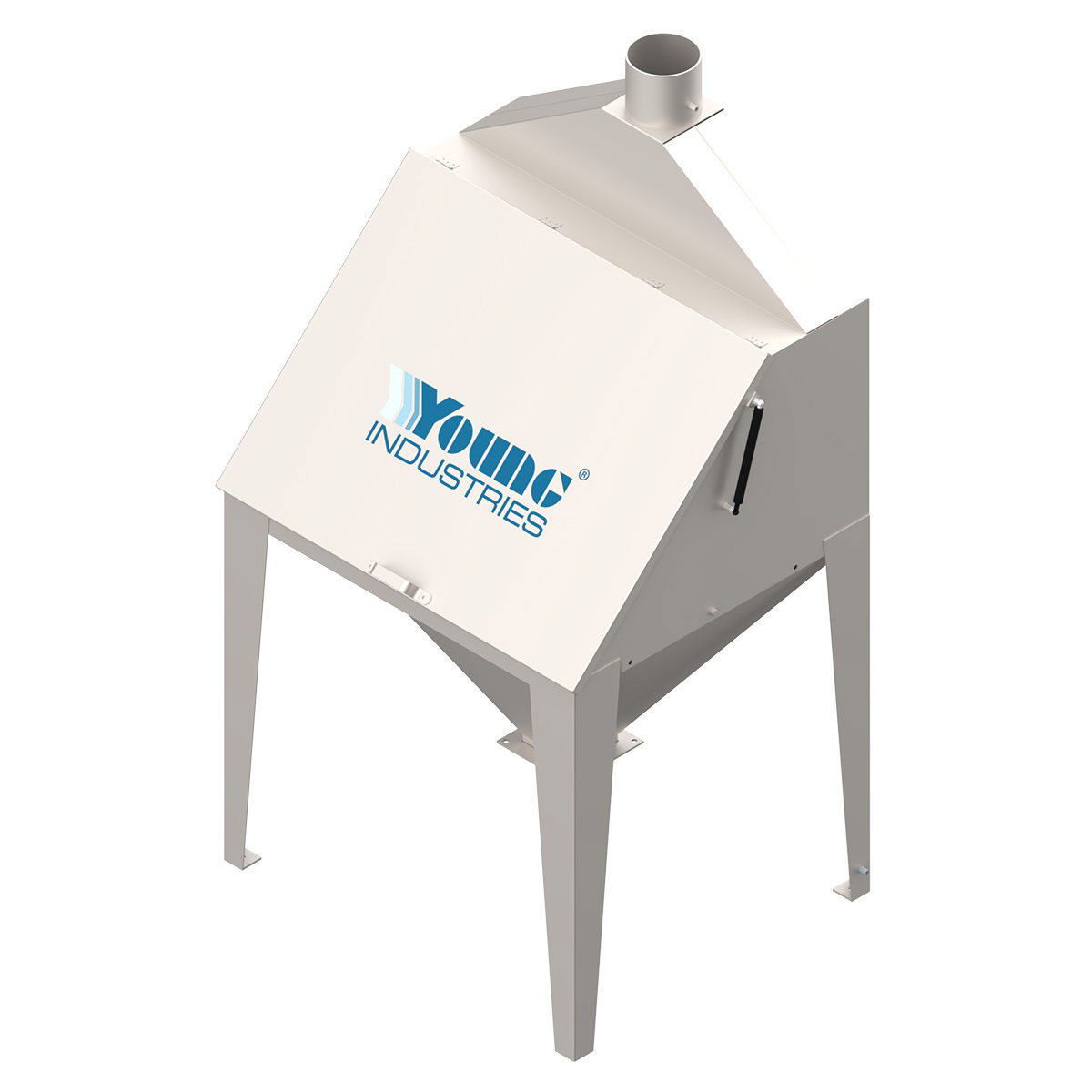
Vented Bag Dump Stations are designed for safe, efficient material unloading with optimal dust control. Learn more about our products features here!
Learn More
Models BC-1 & BC-2
Young Industries Empty Bag Compactors offer an efficient method to dispose of empty bulk material paper bags.
Learn MoreBag Dump Station Questions Our Engineers Hear Every Day
Filtered Bag Dump Stations are completely self‑contained. Each station has its own fan and internal filters built into the enclosure. When an operator opens and empties a bag, the fan pulls dusty air inward, away from the operator, and across the filters. Dust collects on the filter media, and periodic compressed air pulses knock that material back into the hopper below. The result: dust stays contained, and usable product is reclaimed instead of being lost to a central dust collector.
Choose a filtered station when you want a compact, stand‑alone solution with minimal ductwork and no loss of product downstream.
Vented Bag Dump Stations connect to your plant’s central dust collection system. Instead of an onboard fan, these stations use a 6–7″ vent connection to draw air inward through the dump opening. This creates a consistent airflow pattern that captures dust at the source and sends it to a remote collector.
Vented stations are a good fit when you already have centralized dust collection, need higher air volumes, or want all filtration and maintenance handled in one location.
Bag Compactors (BC‑1 and BC‑2) are designed to handle the other half of the problem: empty bags. Mounted directly to a bag dump station or used as a stand‑alone unit, they pneumatically compact empty paper bags inside the dust‑controlled enclosure. This keeps dust from escaping during disposal and significantly reduces waste volume. The BC‑1 typically holds about 120 bags; the BC‑2 holds roughly twice that.
During dumping, the integral fan creates inward airflow at the access door. Any dust generated is pulled toward the rear of the station, where it’s captured on the internal filter media. At set intervals, short bursts of compressed air pulse through the filters. That action dislodges the collected dust, allowing it to fall back into the hopper with the bulk material. Because the dust never leaves the system, valuable fines are recovered instead of being discarded.
As bags are emptied, dust builds up on the filter surface. A timed pulse‑jet system briefly sends compressed air in the opposite direction through the filter media. This momentary reversal shakes loose the dust cake, which drops back into the hopper. This continuous clean‑in‑place process keeps airflow consistent and reduces the need for frequent manual cleaning.
Choose a vented station when:
- You already have a plant‑wide dust collection system
- Higher air volumes are required
- You want centralized filter maintenance
- Your dust control strategy requires remote filtration
Choose a filtered station when:
- You want a self‑contained solution
- Ductwork space is limited
- Reclaiming fines as product is important
- You want a simple, compact installation
Both approaches are proven; the right choice depends on your process, facility layout, and dust control philosophy.
Filtered stations include a Magnehelic® differential pressure gauge that shows the pressure drop across the filters. A gradual rise in differential pressure is normal as filters load. If pressure stays elevated after pulsing or climbs well above your normal operating range, it’s a sign the filters need attention. Specific limits depend on the application and are detailed in the station’s Installation, Operation, and Maintenance (IOM) manual.
Routine maintenance follows standard industrial practice:
- Lock out and isolate the unit
- Open the access door
- Remove and replace filters as needed
- Inspect seals before returning to service
Young Industries provides IOM manuals and instructional videos to walk through the process step by step.
Filtered Stations
- Multiple standard sizes based on bag opening width
- Carbon steel, 304 stainless steel, or 316 stainless steel
- 6–12″ square or round discharge connections
Vented Stations
- Standard widths from 25–45″
- Carbon or stainless construction
- 6–7″ vent connections
Bag Compactors
- BC‑1 and BC‑2 models
- Left‑ or right‑hand mounting
- Stand‑alone or attached configurations
All stations can be customized to suit material flow, space constraints, and downstream equipment.
Start with a few key inputs:
- Bag size and weight
- Bags per hour or per batch
- Dust control approach (filtered vs. vented)
- Available floor space and headroom
- Discharge size and downstream connection
- Whether you want integrated bag compaction
Young Industries Application Data Sheets are designed to capture this information, so our engineers can recommend the right configuration the first time. Contact Young Industries Application Engineers.
Vibratory units help material move through the hopper more consistently, reducing manual intervention and minimizing dust release. Bag compactors keep empty bags inside the controlled environment, cutting cleanup time, improving housekeeping, and reducing airborne dust during disposal. Both options improve safety, efficiency, and operator experience.
Yes. Bag dump stations are commonly paired with Transvair® Venturi Eductors for dilute‑phase pneumatic conveying. Mounted directly on the discharge, a Venturi Eductor uses compressed air to move material downstream—no rotary valve, no moving parts, and no blowback venting required. Vented stations can also integrate with aero‑mechanical conveyors or other pneumatic pickup systems depending on the application.

