
TransFlow Products
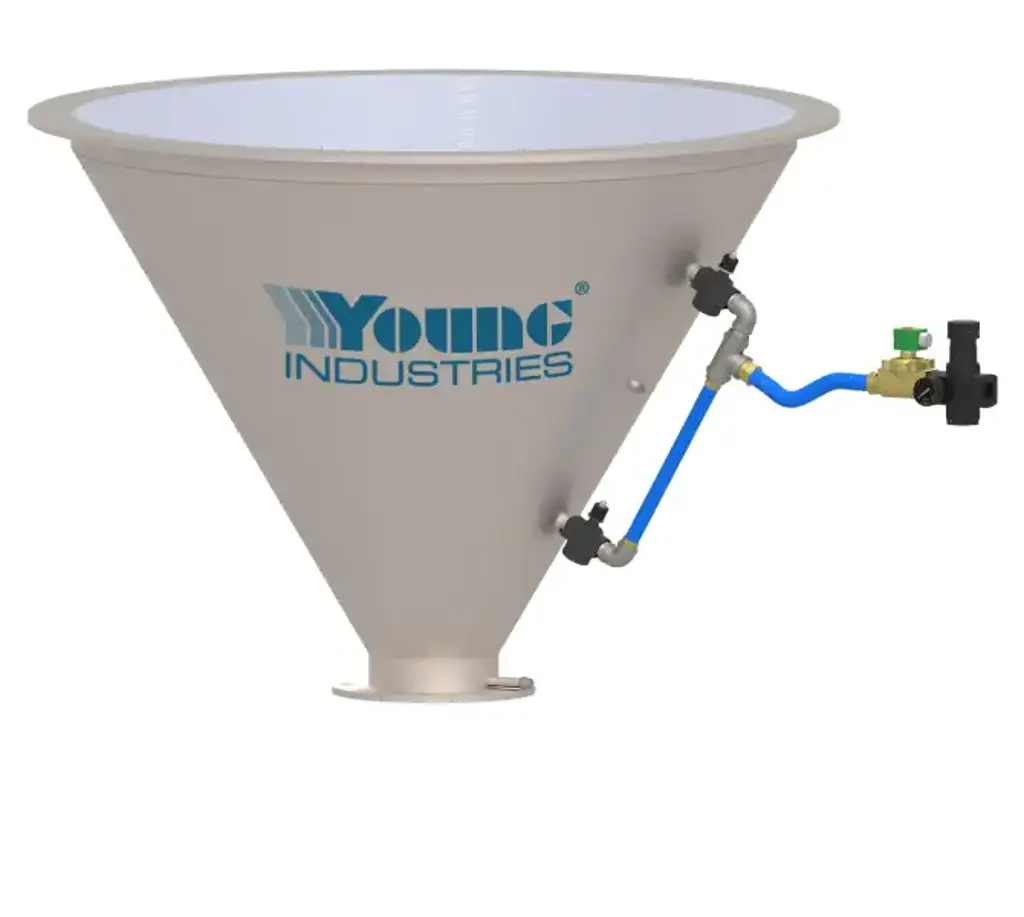
TransFlow® Products enhance process production by ensuring reliable material flow, even with challenging substances like pigments and sticky materials. This system allows for higher flow rates from existing hoppers and silos while significantly reducing maintenance costs due to its durable, corrosion-resistant media and lack of moving parts.
Additionally, TransFlow® minimizes downtime with easy cleaning and operates with less compressed air or gas than other aeration devices, ultimately lowering your overall operational costs.
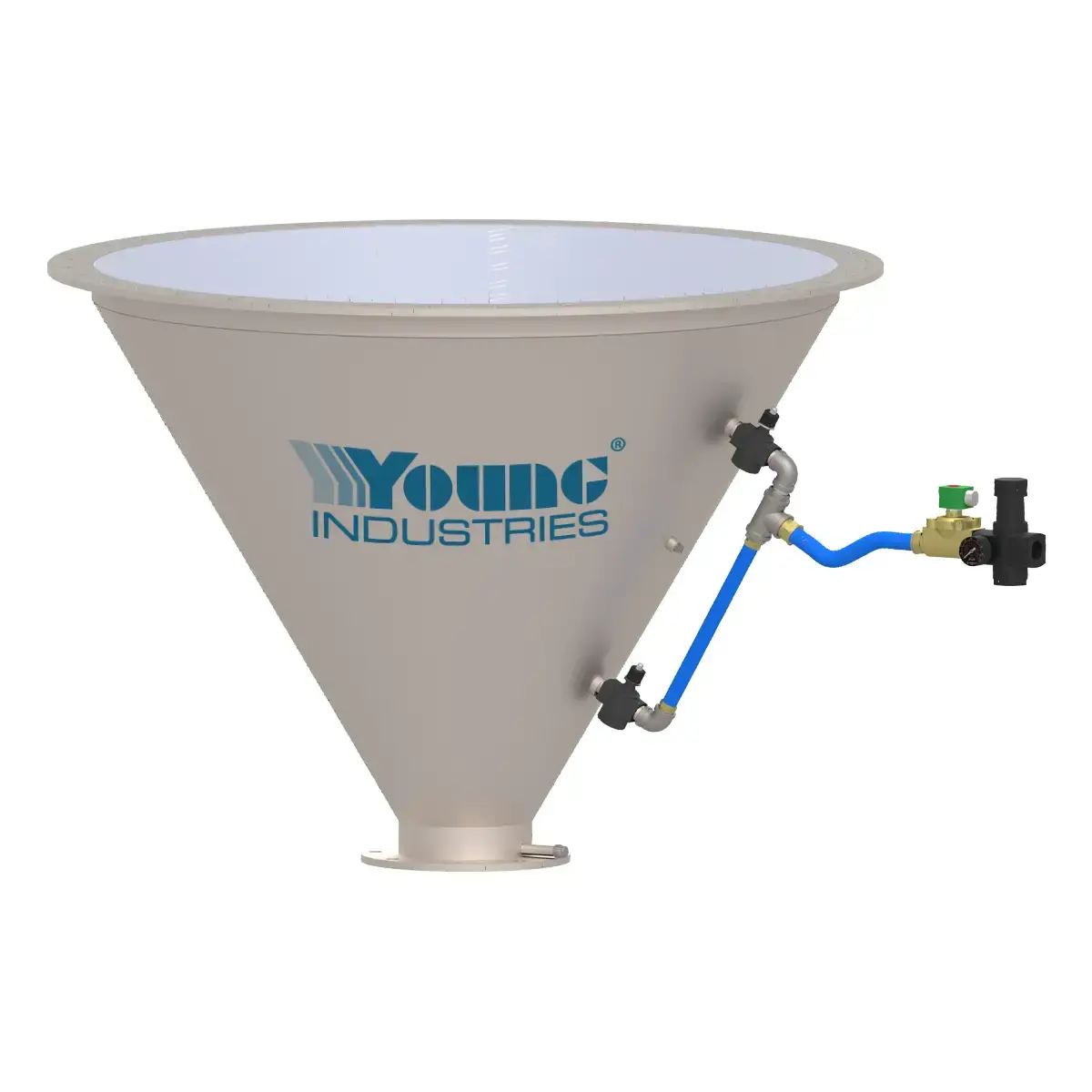
Eliminate flow problems and boost productivity with Young Industries' Silentflow Bin Dischargers featuring TransFlow® technology.
Learn More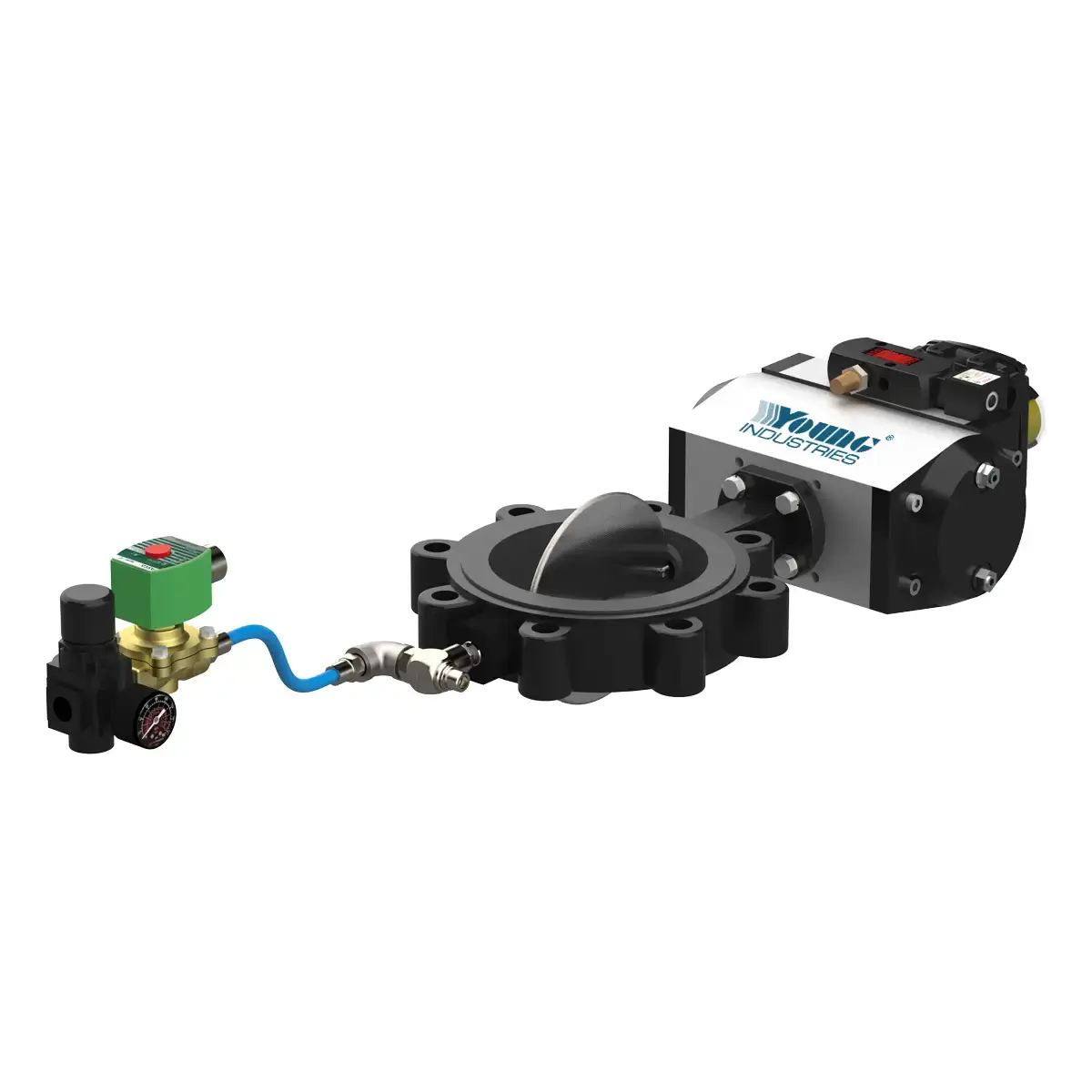
Enhance powder flow and prevent clogs with the Young Industries PowderFlow Butterfly Valve.
Learn More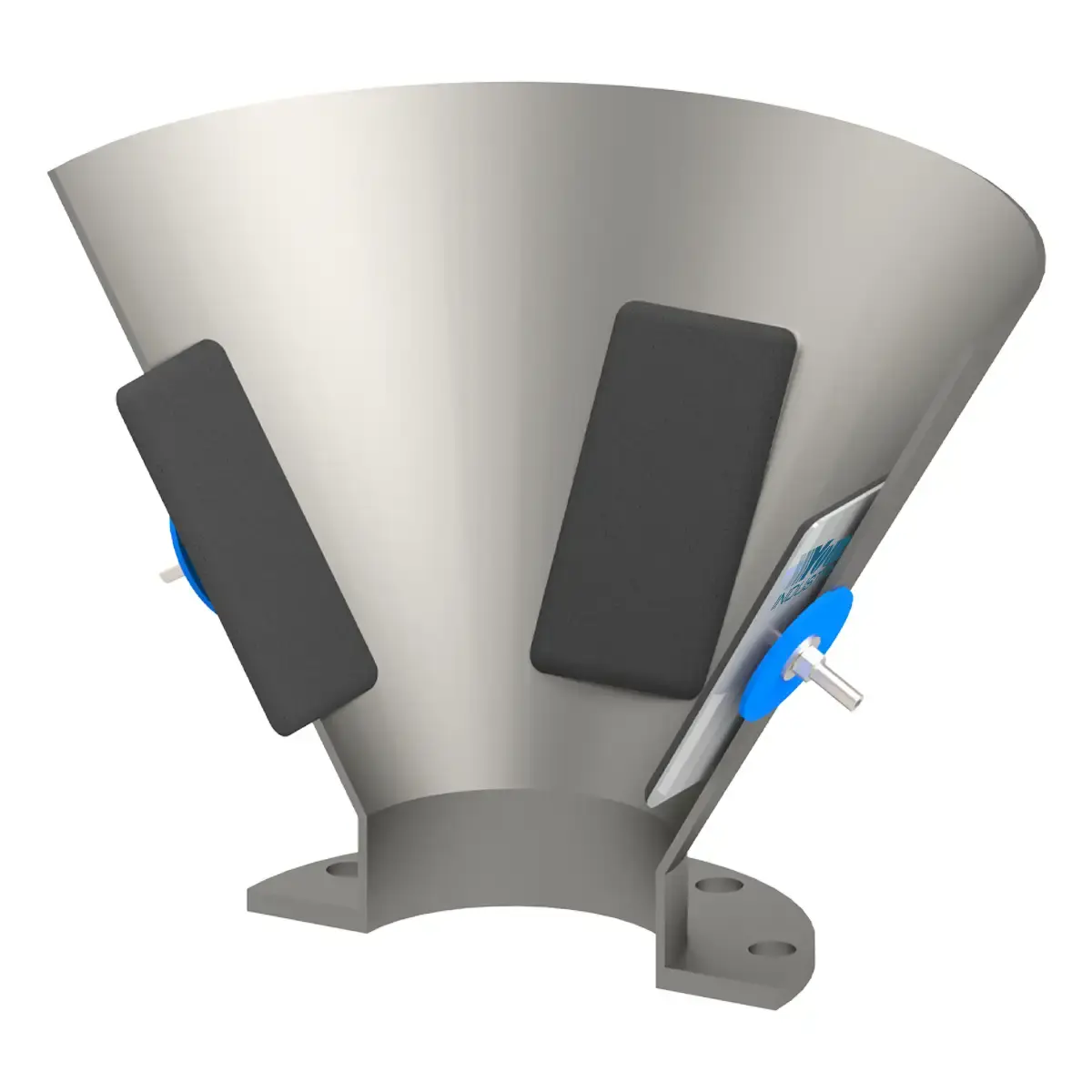
TransFlow Pads outperform other fluidization methods with their superior design. See why TransFlow Pads are preferred over other fluidization options!
Learn More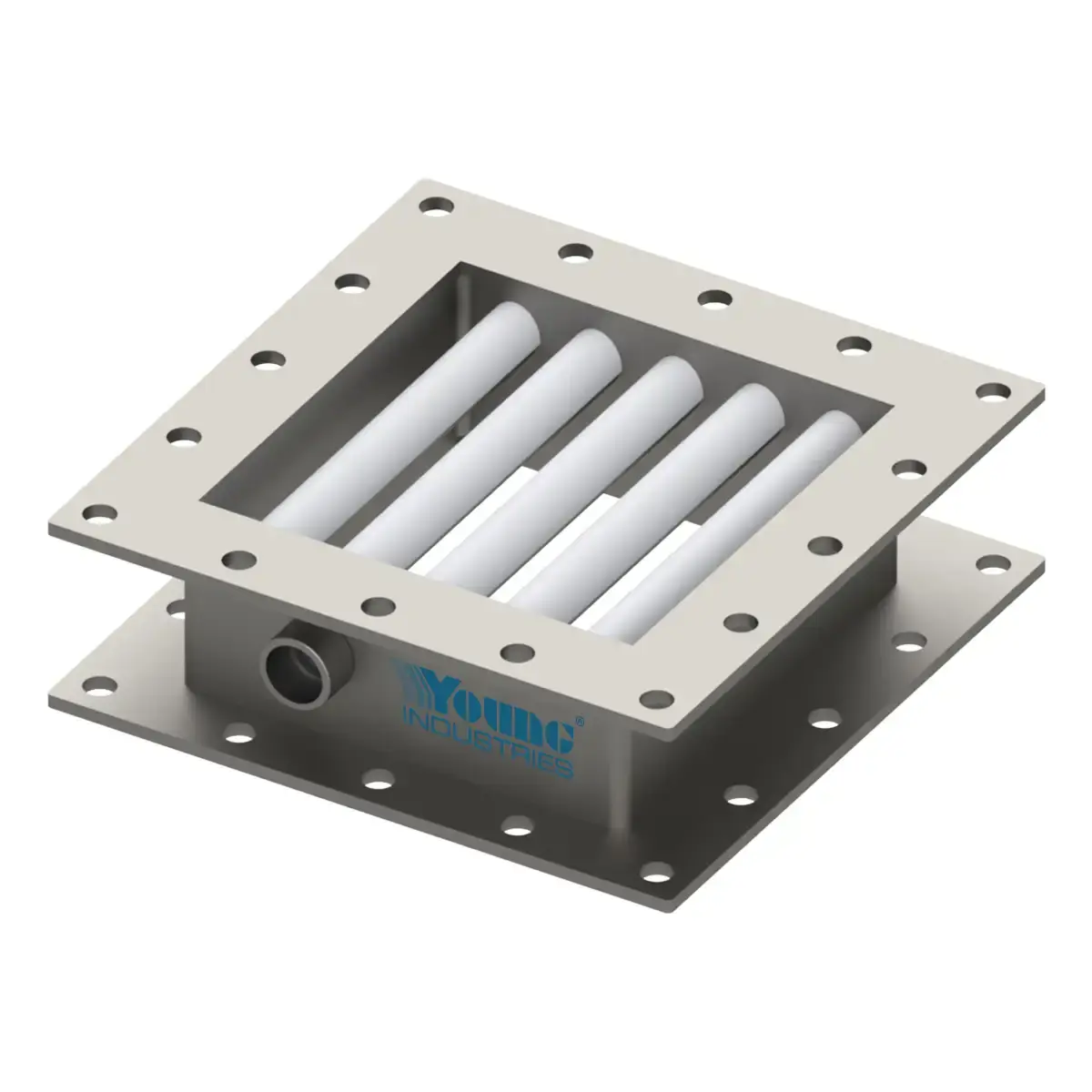
Protect personnel and enhance material flow with Young Industries' SafetyFlow® Grating.
Learn MoreTransFlow® Questions Our Engineers Hear Every Day
TransFlow® is Young Industries' fluidization technology, used across a wide range of products and material-handling solutions. Applications include SilentFlow Bin Dischargers, PowderFlow Butterfly Valve, TransFlow® Pads, SafetyFlow® Grating, Bag Dump Stations, Stingers®, and other equipment designed to improve the flow of difficult powders and bulk solids.
The technology works by introducing a controlled layer of low-pressure air or gas that aerates the material, helping it flow more like a liquid instead of packing, bridging, rat-holing, or hanging up. Wherever cohesive materials flow poorly, TransFlow® can often be incorporated as part of the solution to improve material movement and process reliability.
TransFlow® improves the flow of cohesive powders and bulk solids by introducing a controlled amount of low-pressure air or gas into the material. This aeration reduces particle-to-particle friction, allowing the material to flow more freely and consistently through hoppers, silos, feeders, valves, conveying equipment, and other process systems.
Depending on the application, TransFlow® can be incorporated into a variety of products and equipment designs, including fluidizing pads, bin dischargers, valves, screws, and other material-handling solutions. By enhancing material flow at critical points in the process, TransFlow® helps reduce bridging, rat-holing, packing, and other flow challenges that commonly occur with cohesive powders.
Bridging, rat-holing, and inconsistent discharge from cohesive or sluggish powders. Left alone, these problems mean lower flow rates, more downtime for manual intervention, and unplanned maintenance. In many facilities, operators resort to striking hoppers, bins, or silos to restore flow, which can lead to vessel damage commonly known as "hammer rash." TransFlow also runs on lower compressed air or gas volume than many alternative aeration methods, which keeps operating cost down.
They solve the same problem but not always the same way. “Bin activator” is a common industry term, and it is often associated with vibratory equipment that uses a motor to shake material loose. In some cohesive-material applications, vibration can compact or pack the material, making flow problems worse rather than improving them.
Young's SilentFlow Bin Discharger uses TransFlow pneumatic fluidization media instead, so there is no vibrating motor and no moving parts in contact with the product. If your specification calls out a bin activator, ask whether vibration or fluidization is the actual requirement as it usually comes down to the material and the structure it sits on.
Yes. TransFlow® Pads and other TransFlow® products can often be added to existing equipment to address bridging, ratholing, packing, low discharge rates, or inconsistent flow. Retrofit feasibility depends on the vessel geometry, construction material, wall thickness, outlet size, available access, and the flow characteristics of the material.
Air consumption depends on the TransFlow® product, fluidizing area, material characteristics, desired discharge rate, and operating sequence. TransFlow® is operated with clean, dry, low-pressure air or gas and should be sized for the specific application. Young Industries can determine the recommended pressure, airflow, valve arrangement, and control sequence after reviewing the material and equipment details.
Yes, TransFlow® systems can be designed to use nitrogen or another compatible gas when an inert atmosphere is required. Gas compatibility, available pressure, consumption, process safety, and hazardous-area requirements should be evaluated during system selection.
Young Industries can evaluate application data and, when appropriate, conduct material testing to determine how the powder responds to aeration and fluidization. Testing can help establish product selection, fluidizing area, air requirements, and expected material-flow behavior before equipment is finalized.
TransFlow® products require minimal routine maintenance because the fluidization media contains no moving parts. Recommended maintenance typically includes periodically inspecting the media, air or gas connections, seals, valves, and controls; confirming that the media is receiving clean, dry air at the specified pressure; and checking for damage, contamination, or restricted airflow. Inspection and cleaning frequency depend on the material being handled, operating environment, and usage rate. Worn or damaged components should be replaced using parts recommended by Young Industries.
TransFlow® technology can improve the flow of many fine, cohesive, sticky, or difficult-to-handle powders and bulk solids. Typical applications include pigments, food ingredients, chemicals, minerals, plastics, pharmaceuticals, and other dry materials that tend to bridge, rathole, pack, smear, or discharge inconsistently. Performance depends on factors such as particle size, bulk density, moisture content, permeability, cohesiveness, operating temperature, and hopper geometry. Young Industries can review application data or test the material, when appropriate, to determine whether TransFlow® fluidization is a suitable solution.
TransFlow® fluidization media is manufactured from 316L stainless steel, providing excellent corrosion resistance for a wide range of powder and bulk-solid applications. Other exotic alloys can be evaluated upon request to meet specific material-compatibility, temperature, corrosion-resistance, or process requirements.

