

Rotary Valves
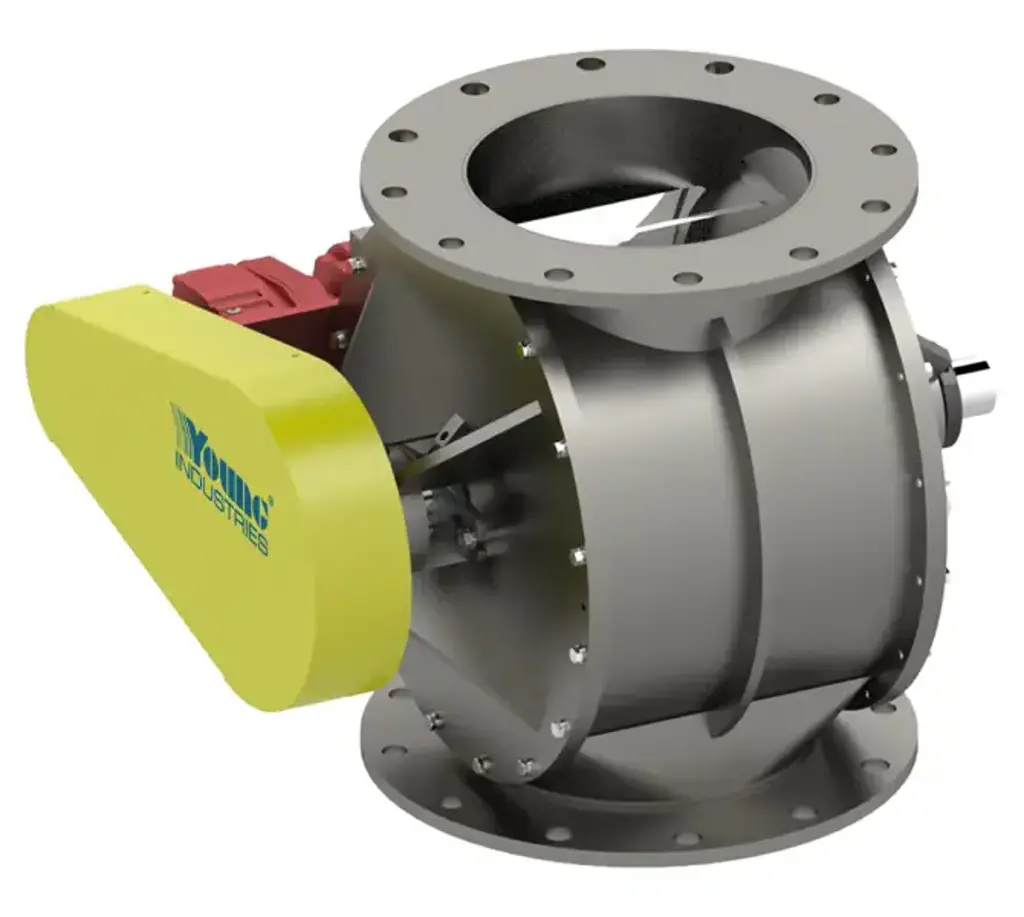
Keep your materials moving and your processes running smoothly with Young Industries' Rotary Valves. Backed by over 75 years of experience, our valves are designed to handle a wide range of bulk materials, from fine powders to pellets and chips.
We understand that every application is unique. That's why we offer a diverse selection of rotary valves, each engineered to address specific challenges and deliver optimal performance. Whether you need high-capacity feeding, precise metering, or airtight sealing, we have the solution for you.
Young Industries Rotary Valve Equipment
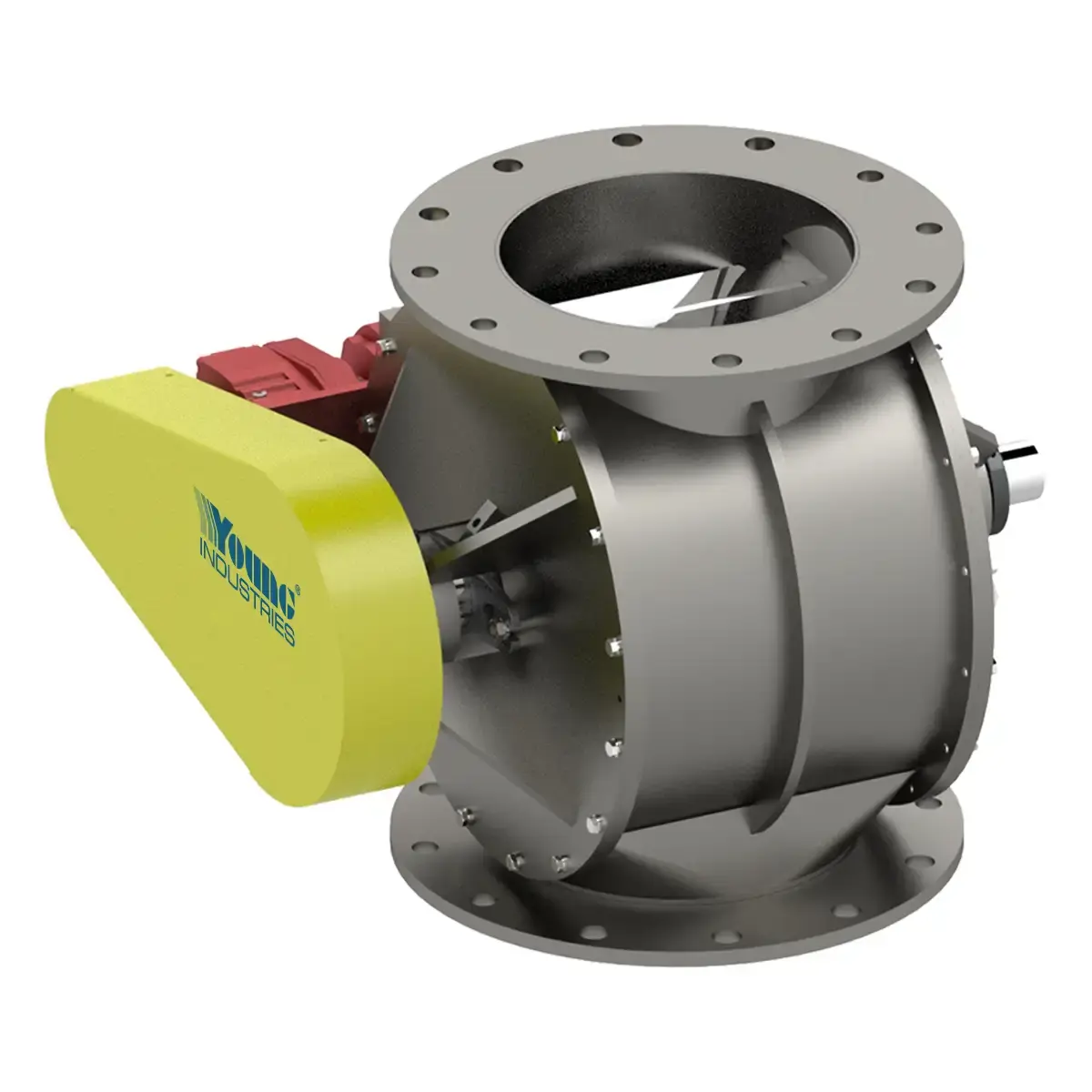
Model HC
The industry's most reliable high-capacity, low-leakage rotary valve.Contact Young Industries today to learn more about our products.
Learn More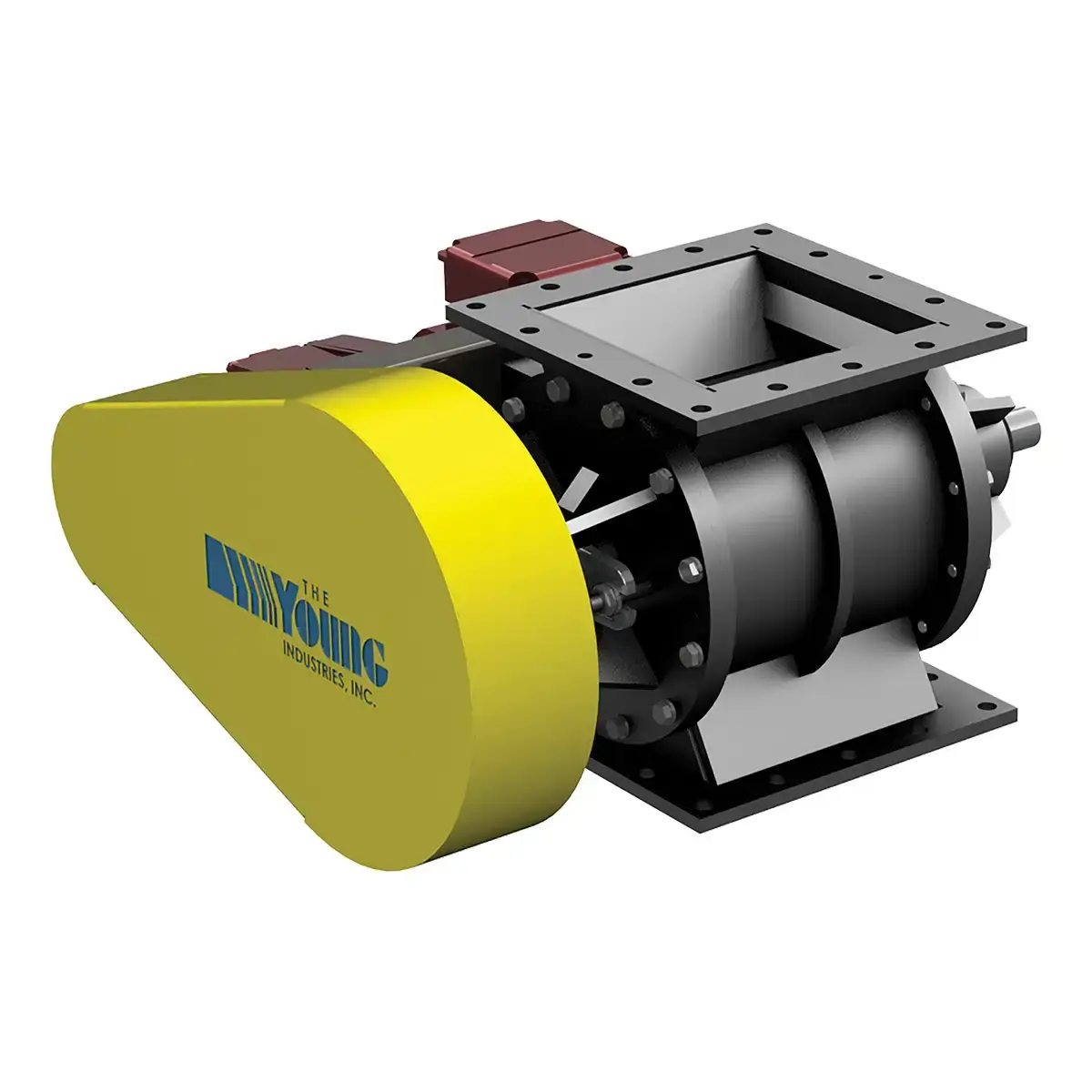
Model LH
The Model LH Rotary Valve is a low-headroom rotary airlock feeder valve designed for applications where space is limited. Learn more!
Learn More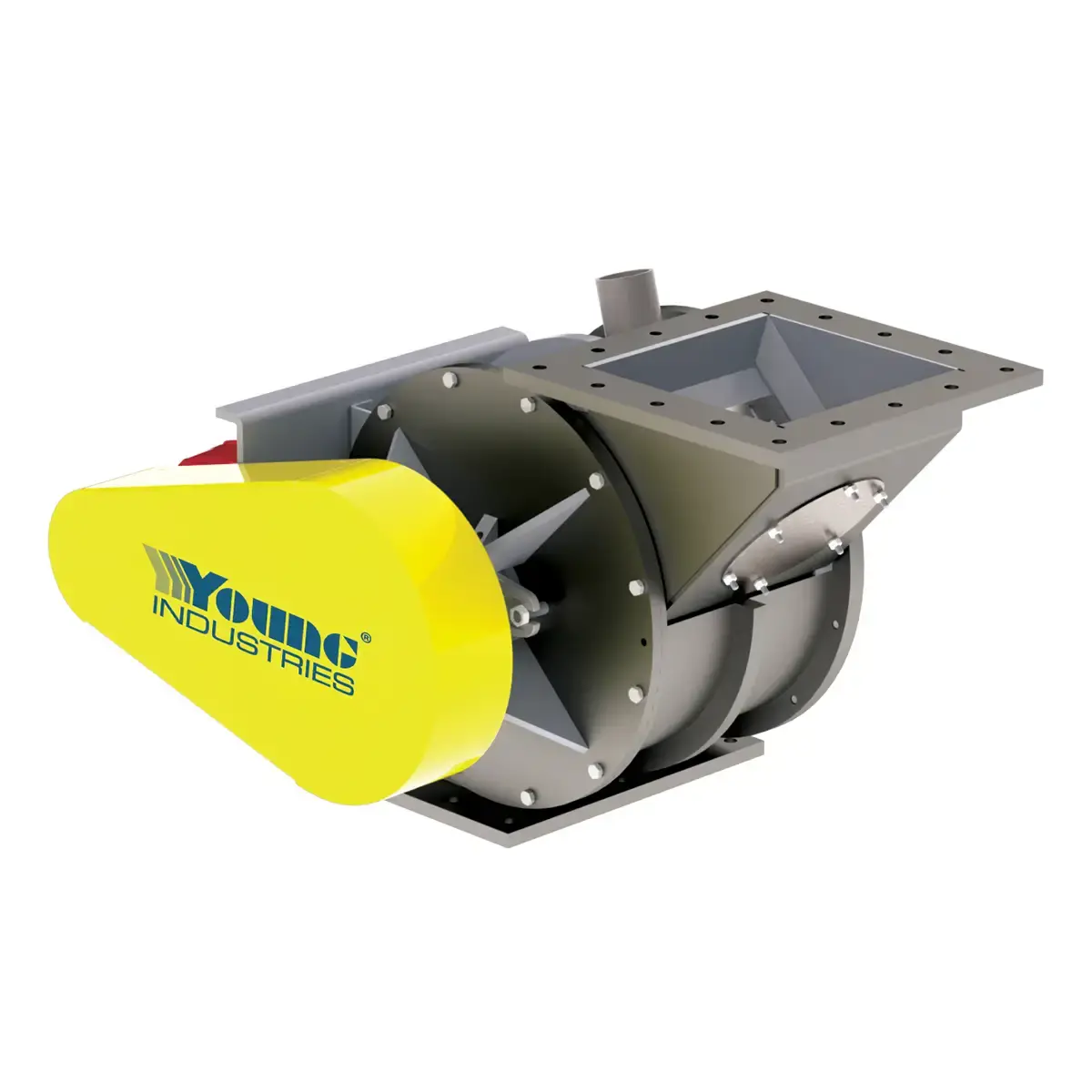
Model SE
Prevent pellet jamming and ensure precise metering with Young Industries' Model SE Rotary Valve.
Learn More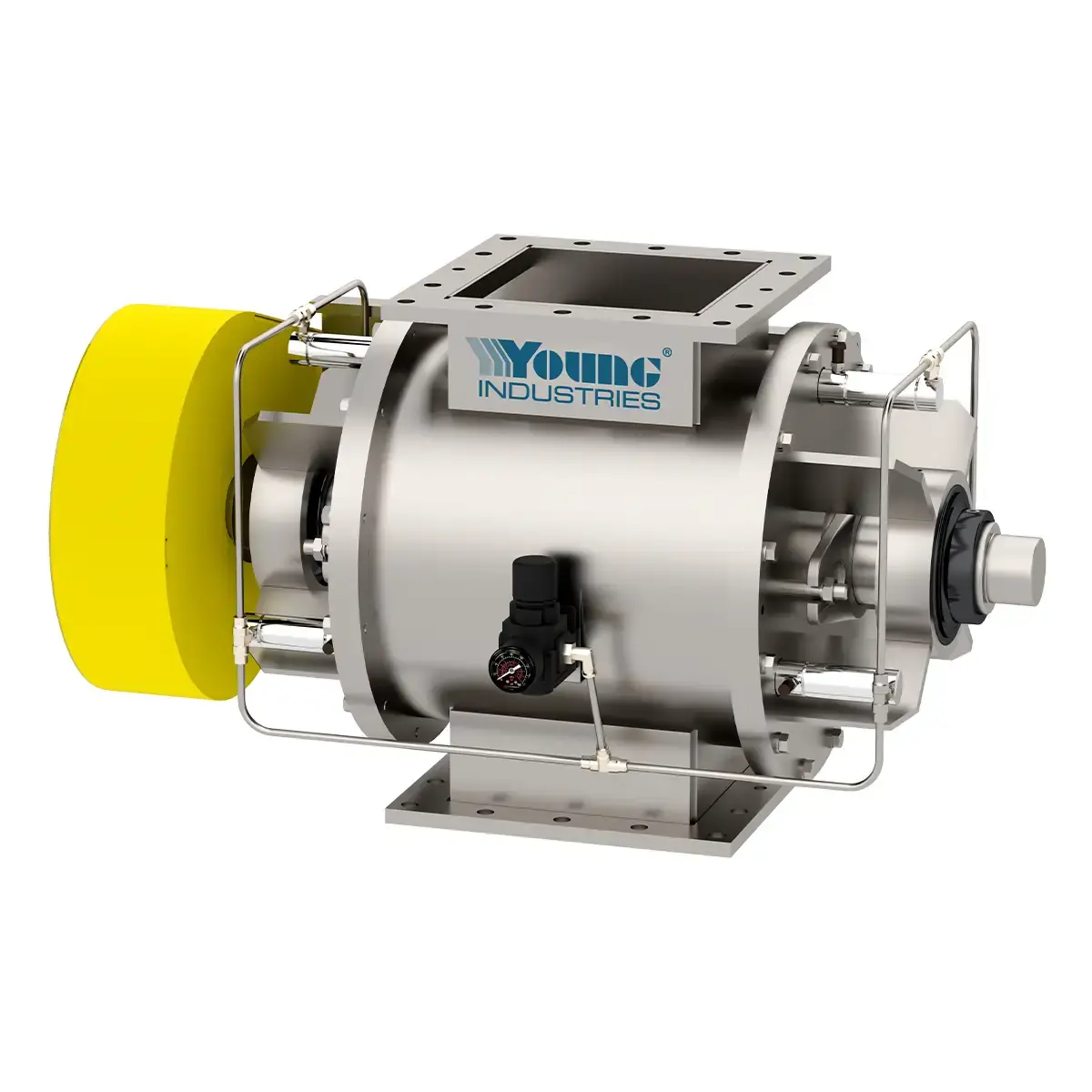
Model ES
Slash air leakage by 50% with Young Industries Model ES End Seal Rotary Valves. Available in HC, LH, and SE models.
Learn More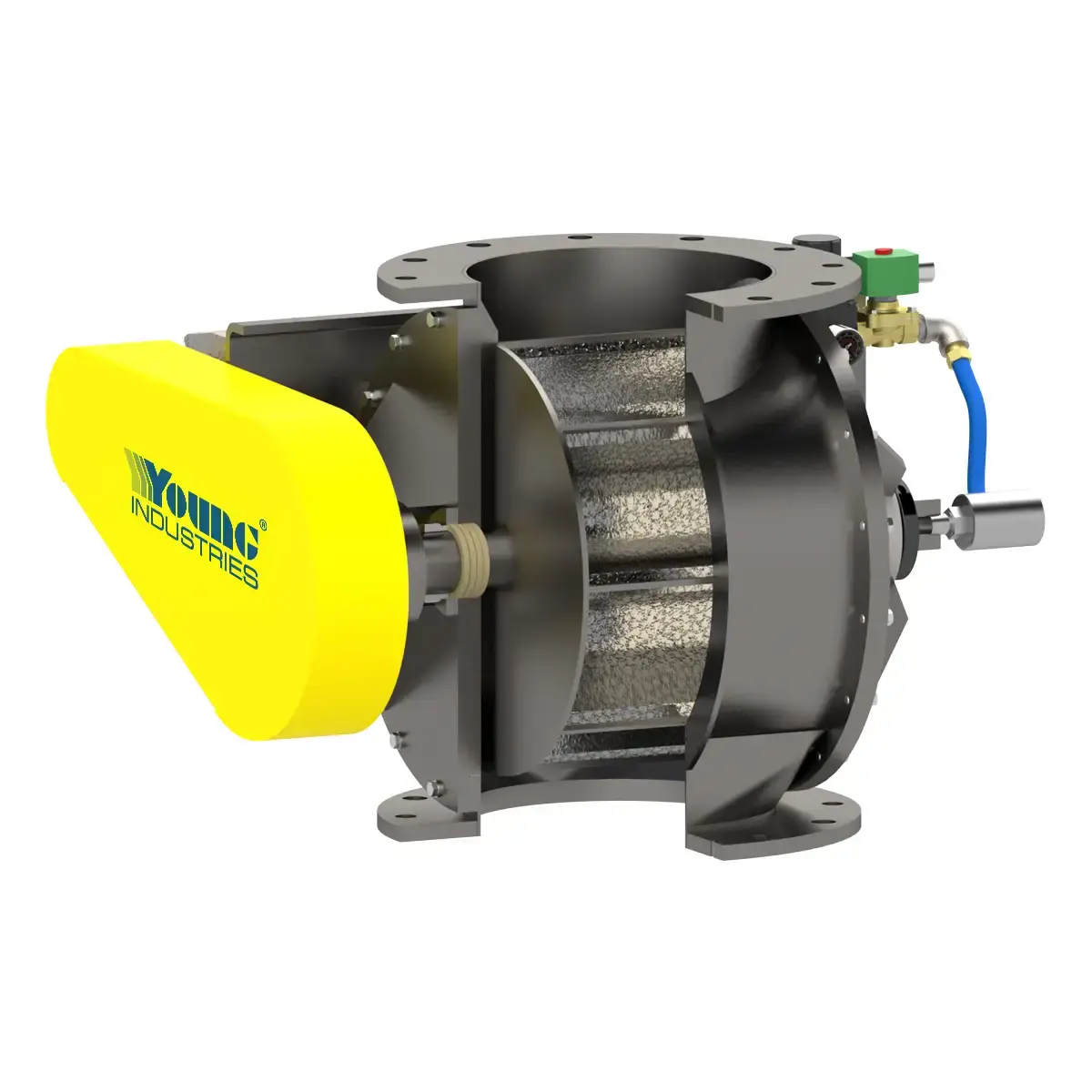
Model EV
Precisely meter cohesive battery materials with the Model EV Rotary Valve. TransFlow® technology ensures smooth flow, even with challenging powders.
Learn More
Model BT
Model BT (Blow-Thru) Rotary Valves offer compact design, air-assisted discharge, and customizable features to ensure efficient, reliable material handling.
Learn More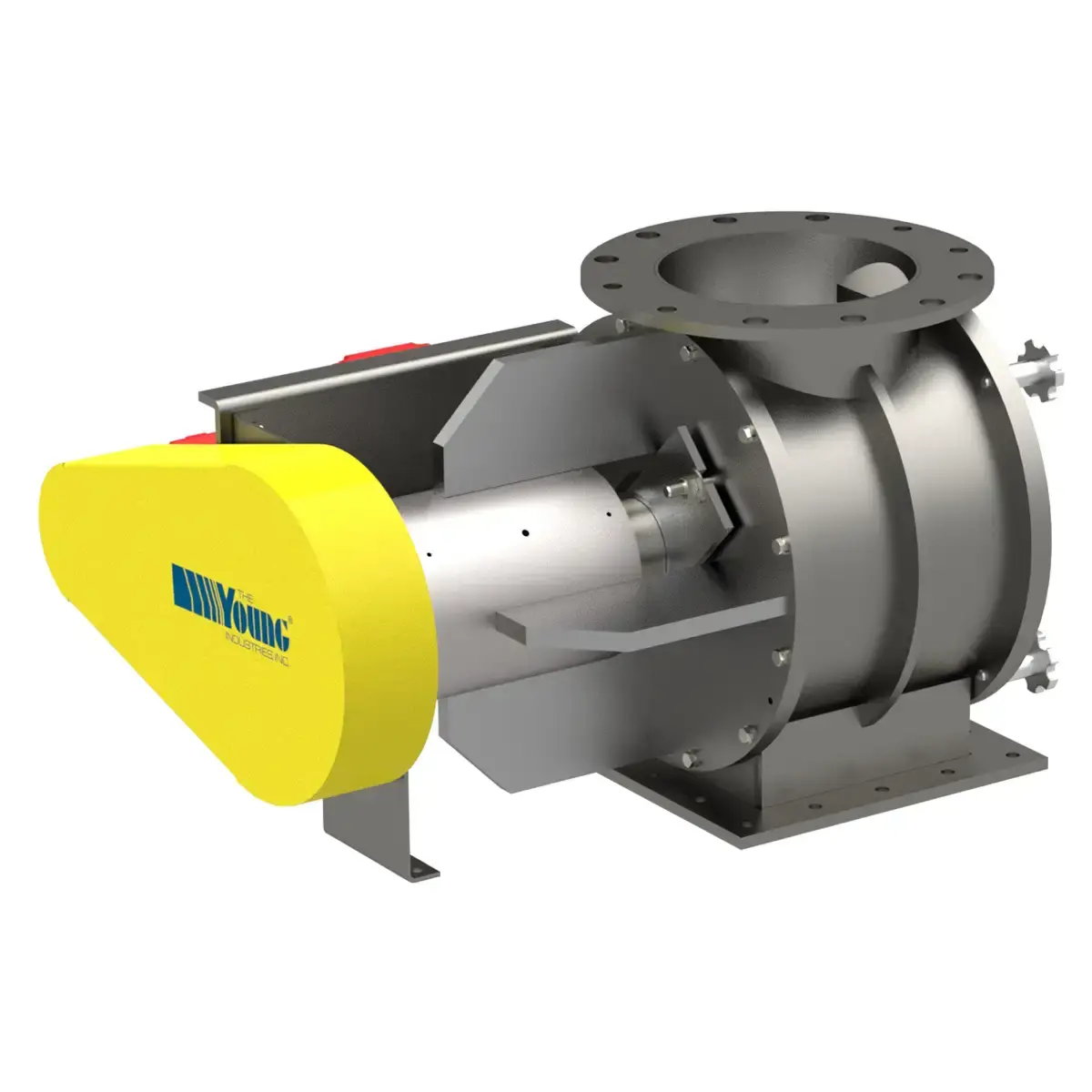
Model QC
Minimize downtime with Young Industries' Quick Clean Rotary Valves. Ideal for process applications demanding quick sanitation.
Learn More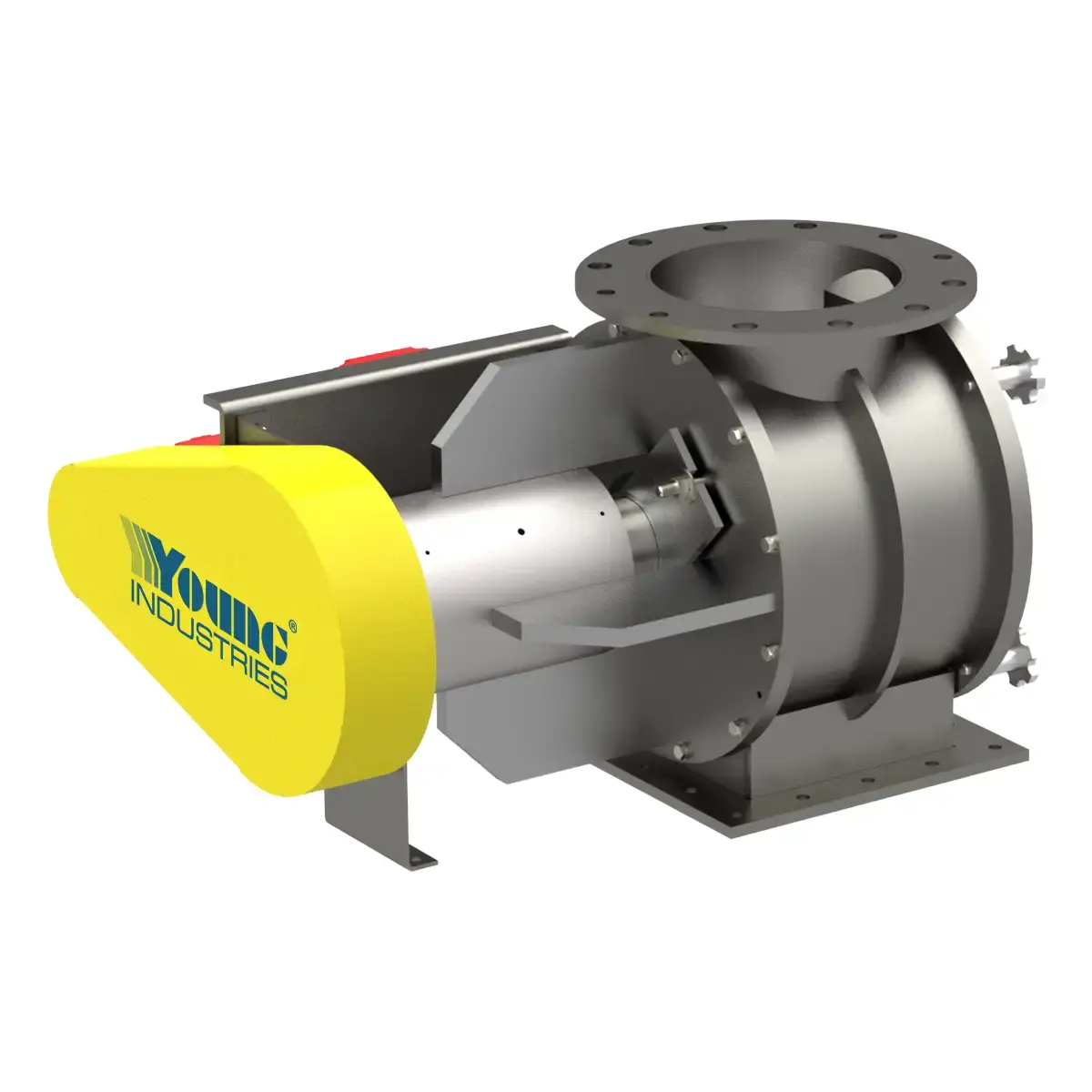
Model CA
Young Industries Cantilevered rotary valves offer a unique design for quick access for interior cleaning.
Learn More
Model RNHC
The Young Industries RNHC Rotary Valve handles pellets up to 1/4" with minimal clipping for a smoother, more consistent flow and reduced downtime.
Learn More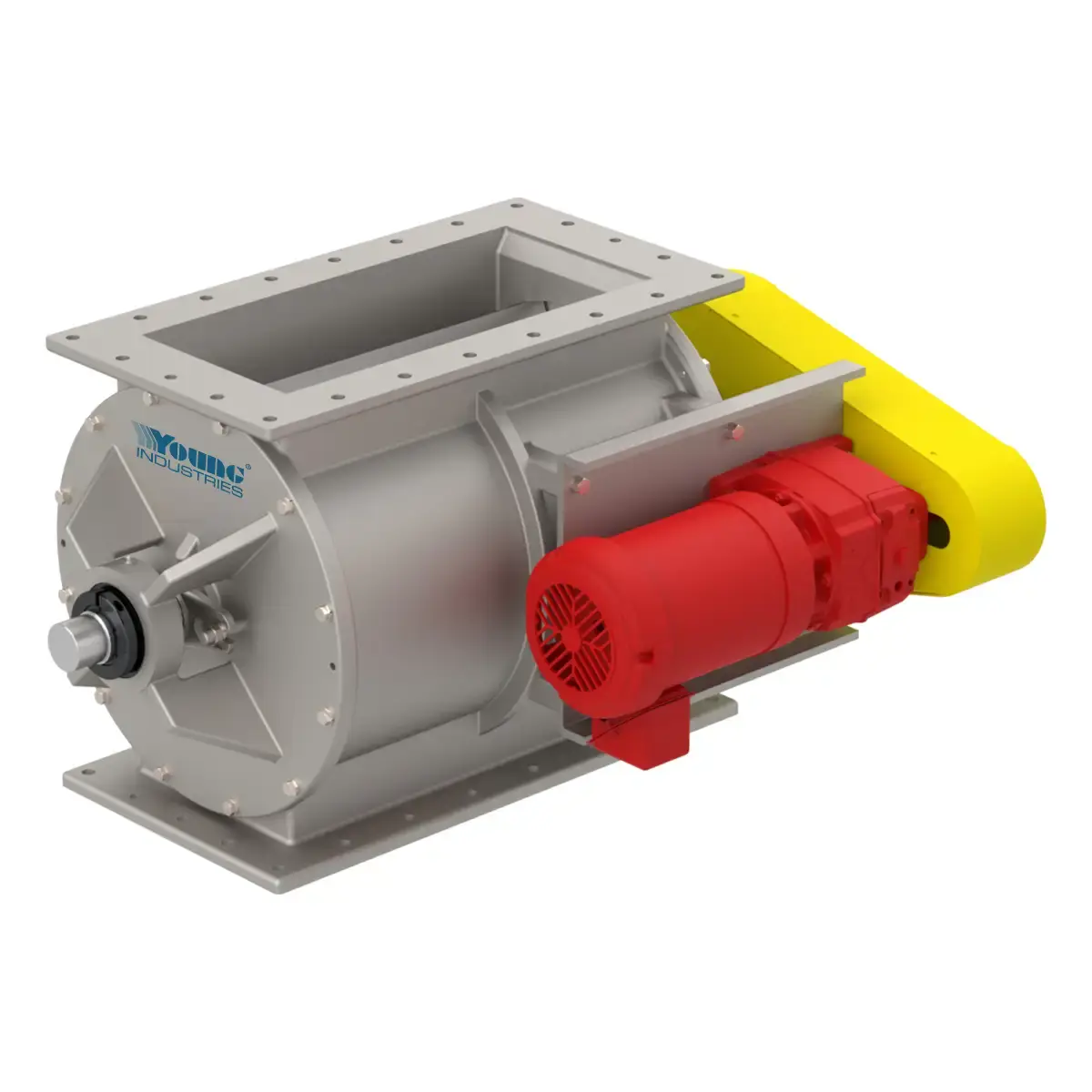
Model HC & LH
Extended Length Rotary Valves (LH, SE, HC) double capacity without increasing height. Perfect for applications with limited headroom and high throughput needs.
Learn More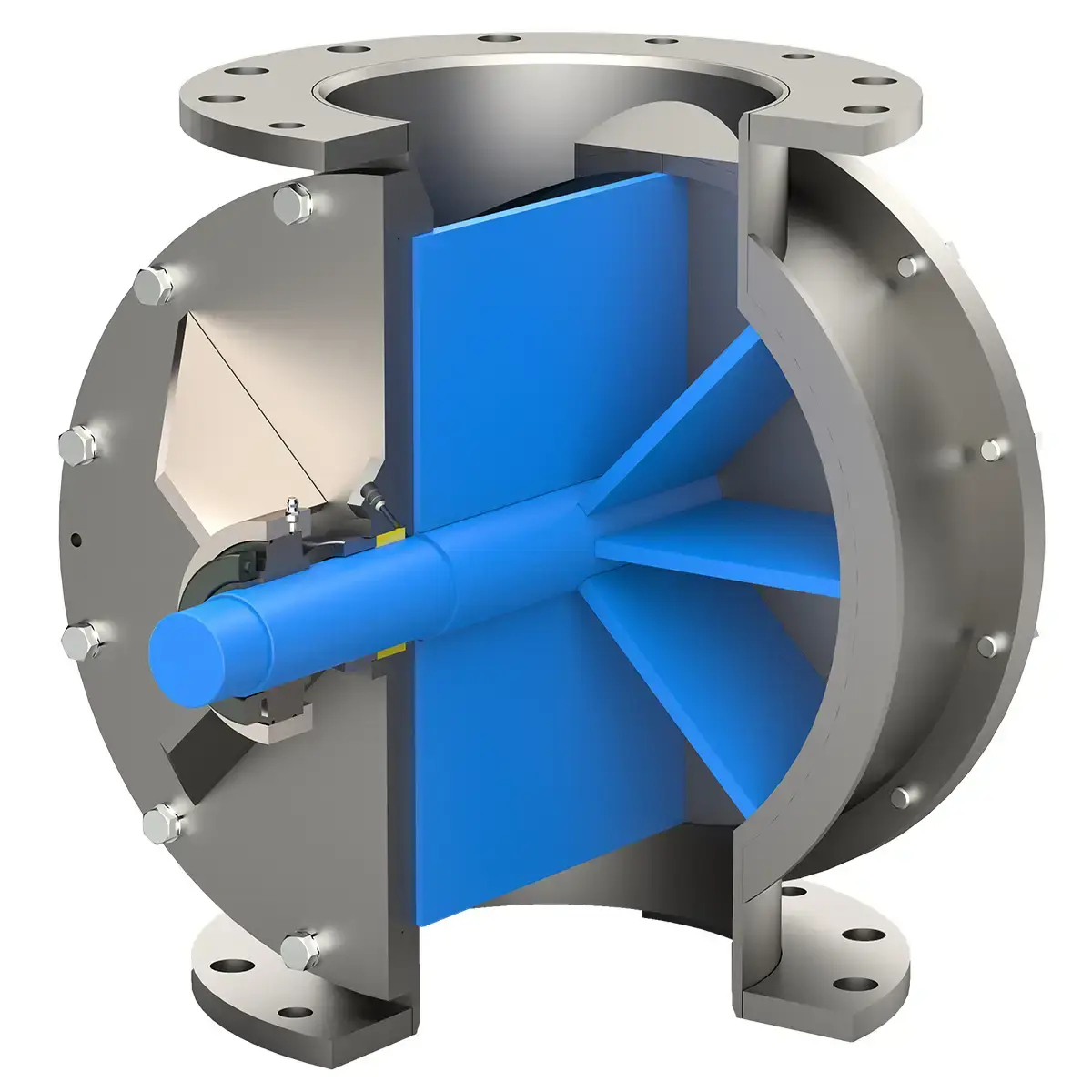
Model HC & LH
NFPA-compliant rotary valves offer safe, reliable powder handling. Expertly engineered to prevent deflagrations and meet your specific process needs.
Learn MoreRotary Valve Questions Our Engineers Hear Every Day
"Rotary valve" is the umbrella term for the device with a housing and multi-vane rotor that meters bulk solids. When that same device is used to maintain a pressure differential between two atmospheres (e.g., charging or discharging a pneumatic conveying system), it's functioning as a rotary airlock (often called a rotary airlock feeder when it also meters). In practice, the hardware can be the same; it's the duty that differs:
- Airlock duty: isolate pressure while passing solids (e.g., between a dust collector and atmosphere or into a pressurized conveying line).
- Young's valve pages explicitly describe this role (e.g., Model LH "acts as a reliable airlock, preventing air or gas loss between pressure zones"). Use an airlock whenever there's a pressure difference and air/gas containment matters.
- HC (High Capacity): Large rotor diameter and "straight-through" pocket filling; industry-leading low leakage; best when you need maximum throughput and tight air/gas control.
- LH (Low Headroom): Compact profile to fit tight spaces while maintaining airlock function; choose LH' ,:;,,-')
where vertical clearance is limited. Extended-length option doubles capacity without added height. - SE (Side Entry): Offset inlet reduces pellet clipping/jamming by limiting pocket fill (~40% typical); suited for pellets, chips, flakes.
- ES (End Seal option): Add-on sealing method that reduces axial leakage ~50% via pneumatically loaded peripheral rings; ideal for low bulk density and processes sensitive to blowback/leakage.
- BT (Blow-Thru): Integrated convey line through end plates; air-assisted discharge of cohesive powders; compact where headroom is tight.
- QC (Quick-Clean): Design allows rotor removal and interior access without disturbing the packing gland; best where frequent sanitation/changeovers are required.
- CA (Cantilevered): Rotor cantilevered for tool-less disassembly; HC-CA/LH-CA carry 3-A Dairy clean-in-place approval; ideal for sanitary applications.
ES places peripheral sealing rings between the rotor shroud and end plates. Pneumatic cylinders continually bias the rings to maintain sealing force, eliminating axial leakage paths at the end plates and thus reducing differential-pressure leakage by ~50% compared with standard end-clearance designs. See Young's product page and explainer video.
QC provides bolt-in access door and a cantilever-style rotor withdrawal so the rotor slides off without disturbing the packing gland or shaft seal. That means faster, safer cleaning with less re-packing and less downtime. Options include removable rotor puller/davit and replaceable rotor tips for wear or sanitation.
CA places both bearings on one side, with a hinged access door on the other, so all product-contact parts are rapidly accessible and removable without tools. Young notes HC-CA and LH-CA have achieved 3-A Dairy clean-in-place approval, aligning with food/dairy sanitary expectations. (3-A standards define hygienic design/cleanability requirements for food/dairy equipment.)
BT integrates the convey line through the end plates, so motive air sweeps pockets as they discharge, helping clear cohesive or sticky powders. Because the manifold is "in" the valve, overall height is lower than drop-thru + manifold combinations-good where headroom is limited.
Open the bolt-in access door, withdraw the cantilevered rotor (packing gland remains intact), clean rotor/housing, reinsert, and secure. This preserves shaft packing integrity and reduces re-packing tasks between cycles. (Use the QC bulletin/Drawings for clearances; follow the IOM.)
Young offers cast or fabricated carbon steel and stainless steels broadly across the line, with options for aluminum, Hastelloy, and titanium on select models. Consider process temperature (standard designs to 250 °F, special designs to 1,000 °F), differential pressure (standard 15 PSIG housing/DP), corrosion, abrasion, and sanitation (SS surface finish as needed). See model pages for specific options.
- Powders with poor flow➔ HC (throughput/low leakage) or ES (if leakage is critical), BT (if cohesive and headroom tight).
- Pellets/chips➔ SE (minimize clipping/jams), RNHC for pellet metering use cases.
- Frequent cleaning/sanitary➔ QC (quick service) or CA (tool-less access; 3-A where applicable).
- Tight vertical space➔ LH (and Extended-Length LH/HC to boost capacity w/o height).
Yes - use Young's Rotary Valve Calculator on the website (and the iOS app) to input required capacity, bulk density, material class, and valve function to get a preliminary size recommendation before engineering review.

